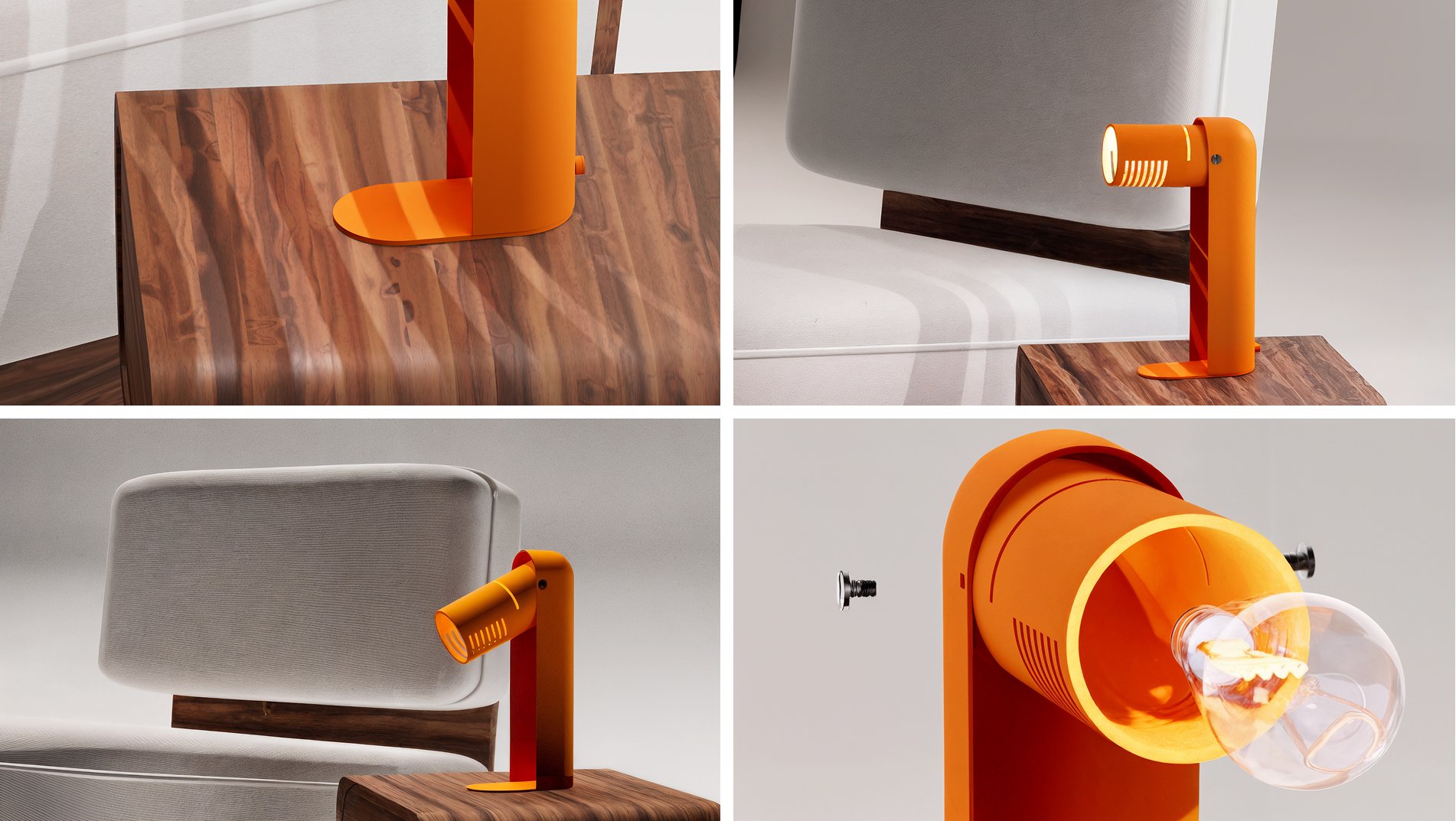
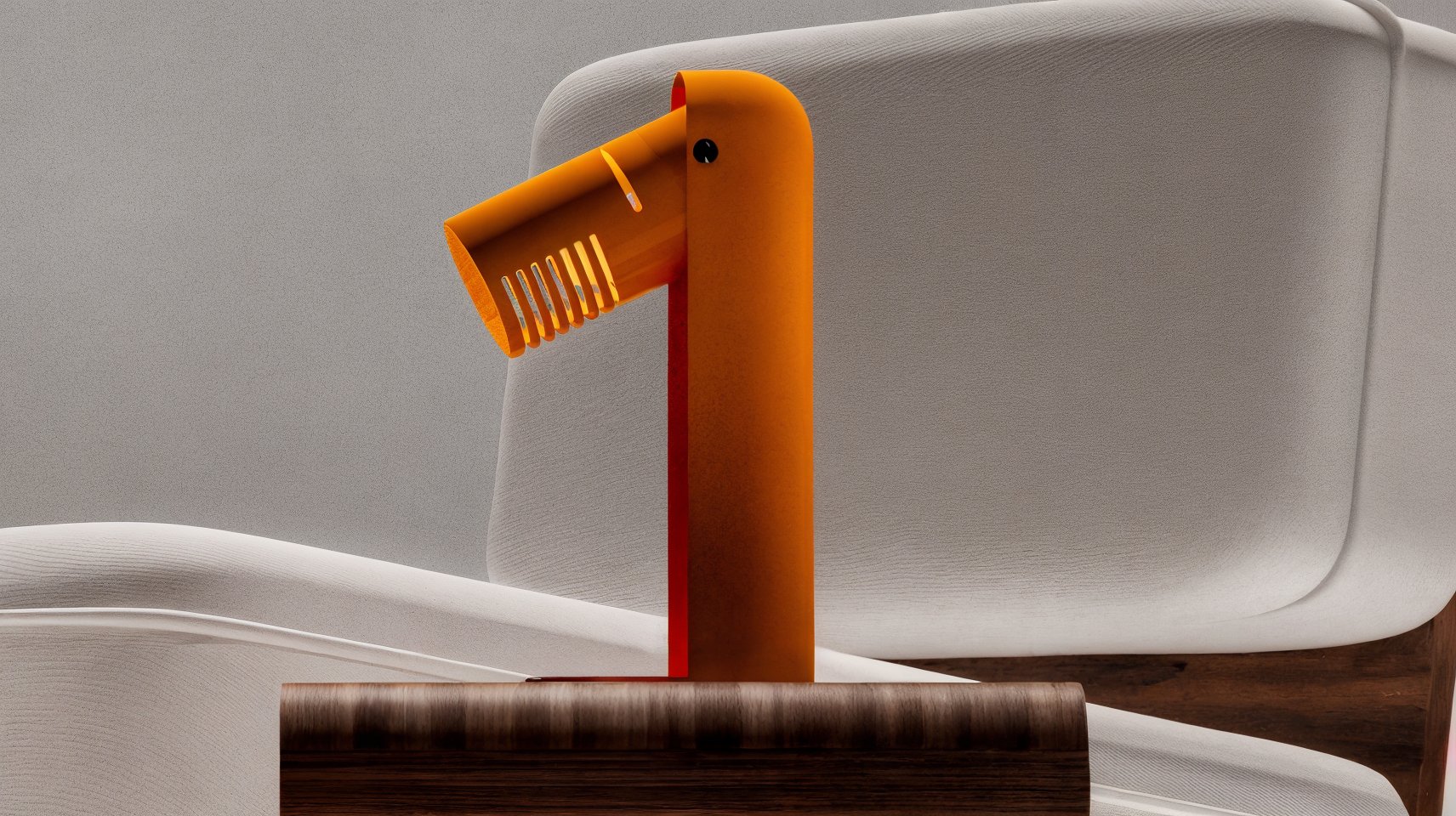
A 4K 3D product animation and campaign for the 1970s Flip Top Desk Lamp, built in Cinema 4D and Redshift with an AI-assisted pipeline.
3D product film for the Flip Top Desk Lamp
3D Modelling · Art Direction · 3D Product Animation · Cinema 4D · Redshift · Higgsfield
Some objects don't need reinventing. They just need to be seen properly.
The Flip Top Desk Lamp, designed by Richard Carruthers for Leuka in the 1970s, is one of those objects. Clean geometry, visible function, nothing that doesn't earn its place.
I rebuilt it from scratch in 3D and produced a 3D product animation and campaign around it, combining Cinema 4D, Redshift and AI tools. It's a personal project, not a Leuka commission: a tribute to a design I admire. This is how it happened.
Brand research and art direction
The starting point wasn't the software. It was the brand.
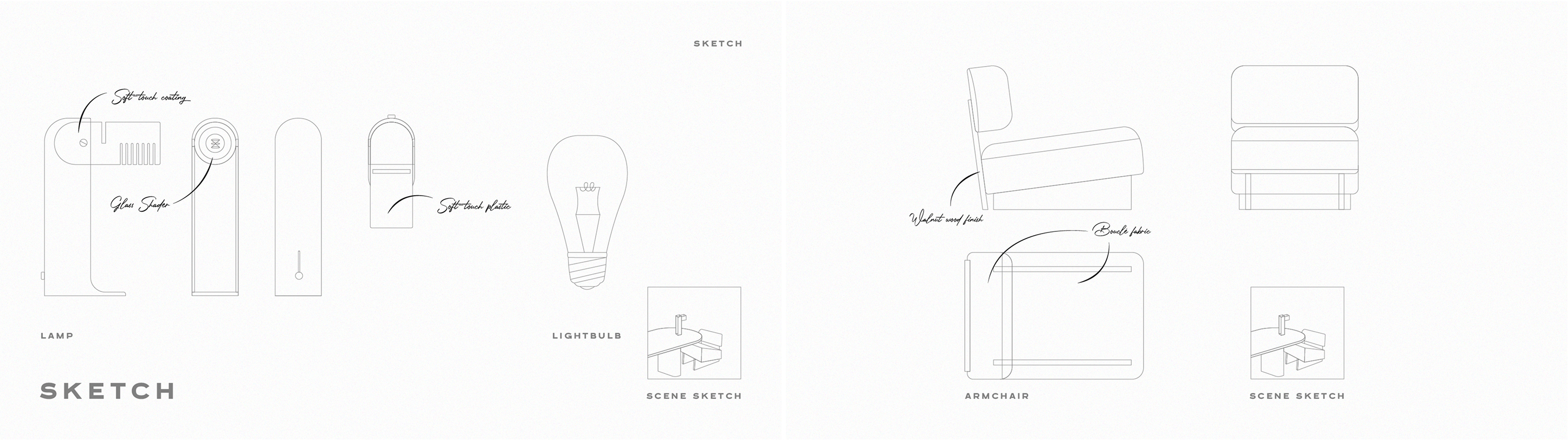
Before opening Cinema 4D, I researched Leuka's existing advertising: what they had published around this lamp, how they positioned it and what tone they used. The goal was to understand the message the piece should carry, and build a film that felt like a tribute to it.
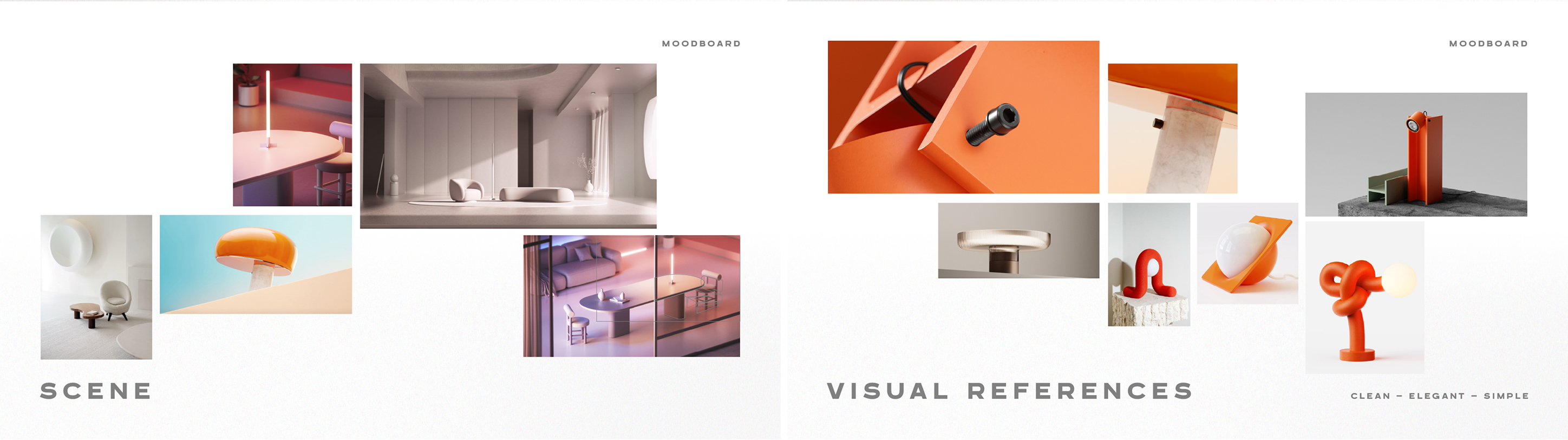
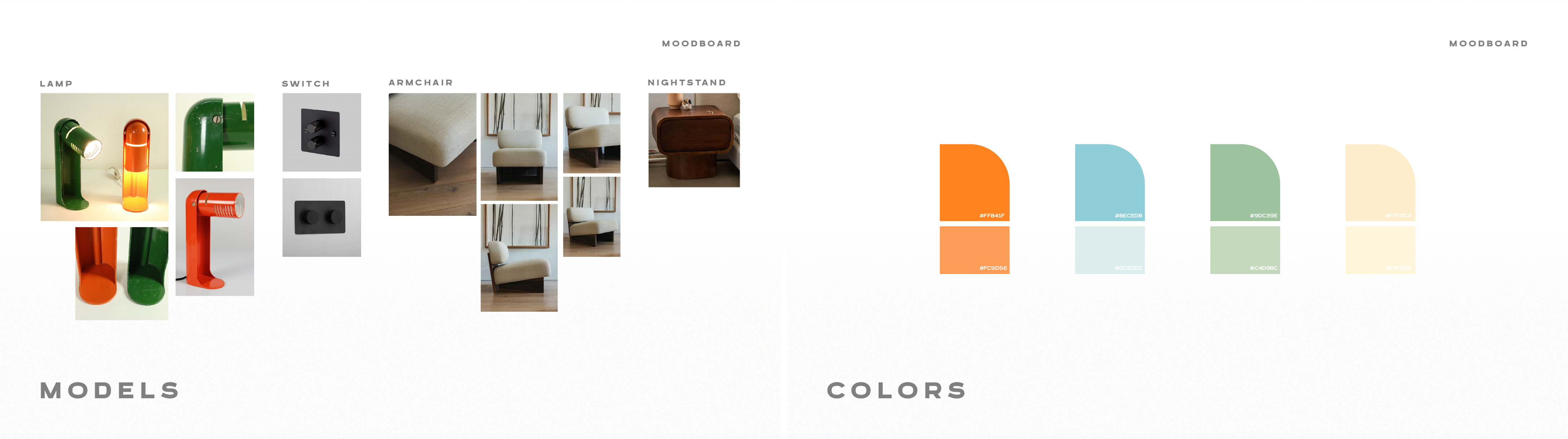
Then I created a moodboard: textures, colours, visual references and a selection of films and campaigns to inform the direction. Three words became the filter for every decision that followed: Clean. Elegant. Simple.
Moodboard and visual direction
The moodboard was organised into four blocks: lamp references, scene references, textures and colour palette.
Orange #FF841F was non-negotiable: it's the lamp's identity. The scene (walnut table, bouclé armchair, off-white background) was defined here before a single polygon was modelled. The decisions happen on paper. The software executes them.
3D modelling in Cinema 4D
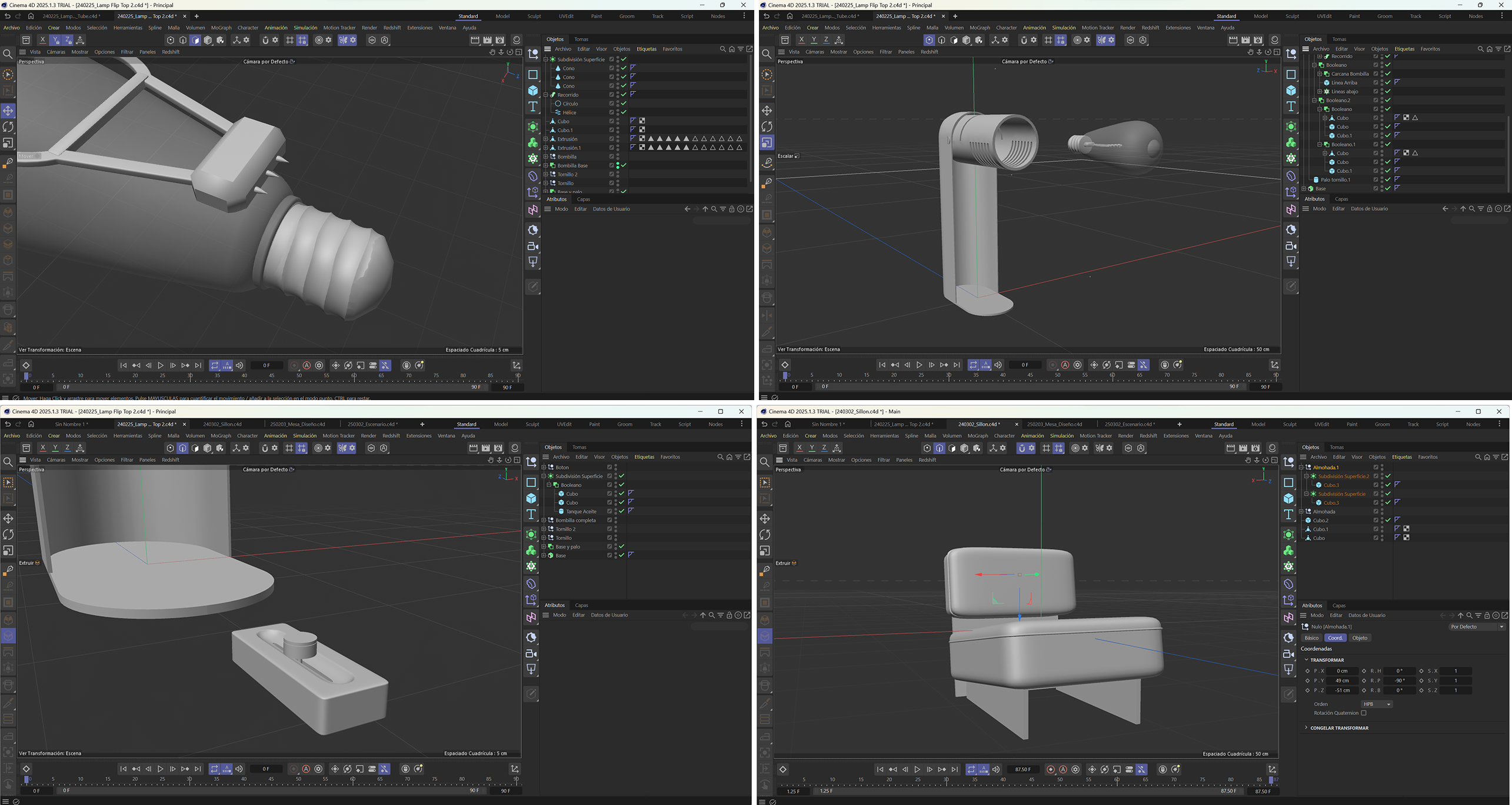
With the visual direction locked, I started modelling in Cinema 4D.
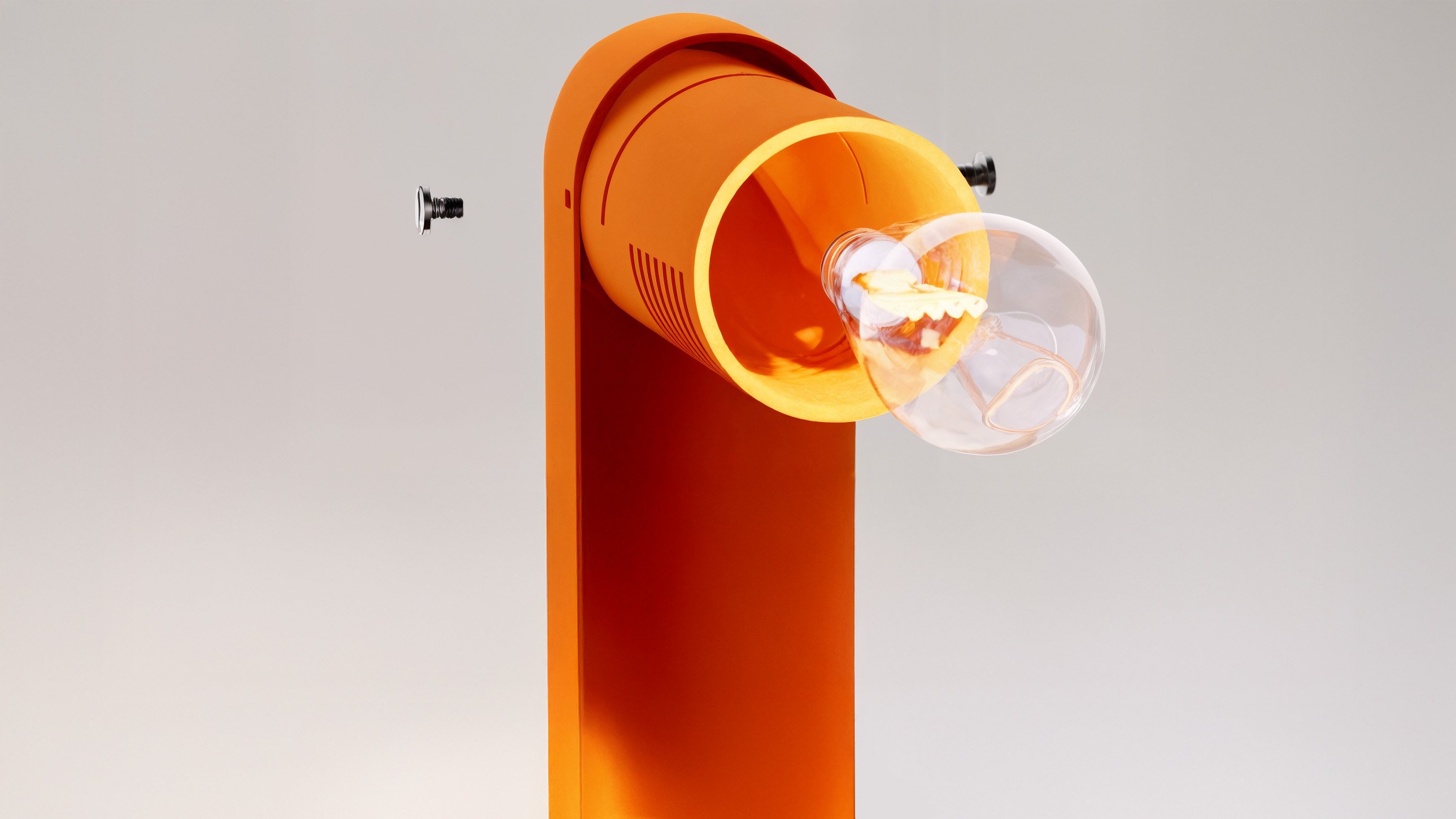
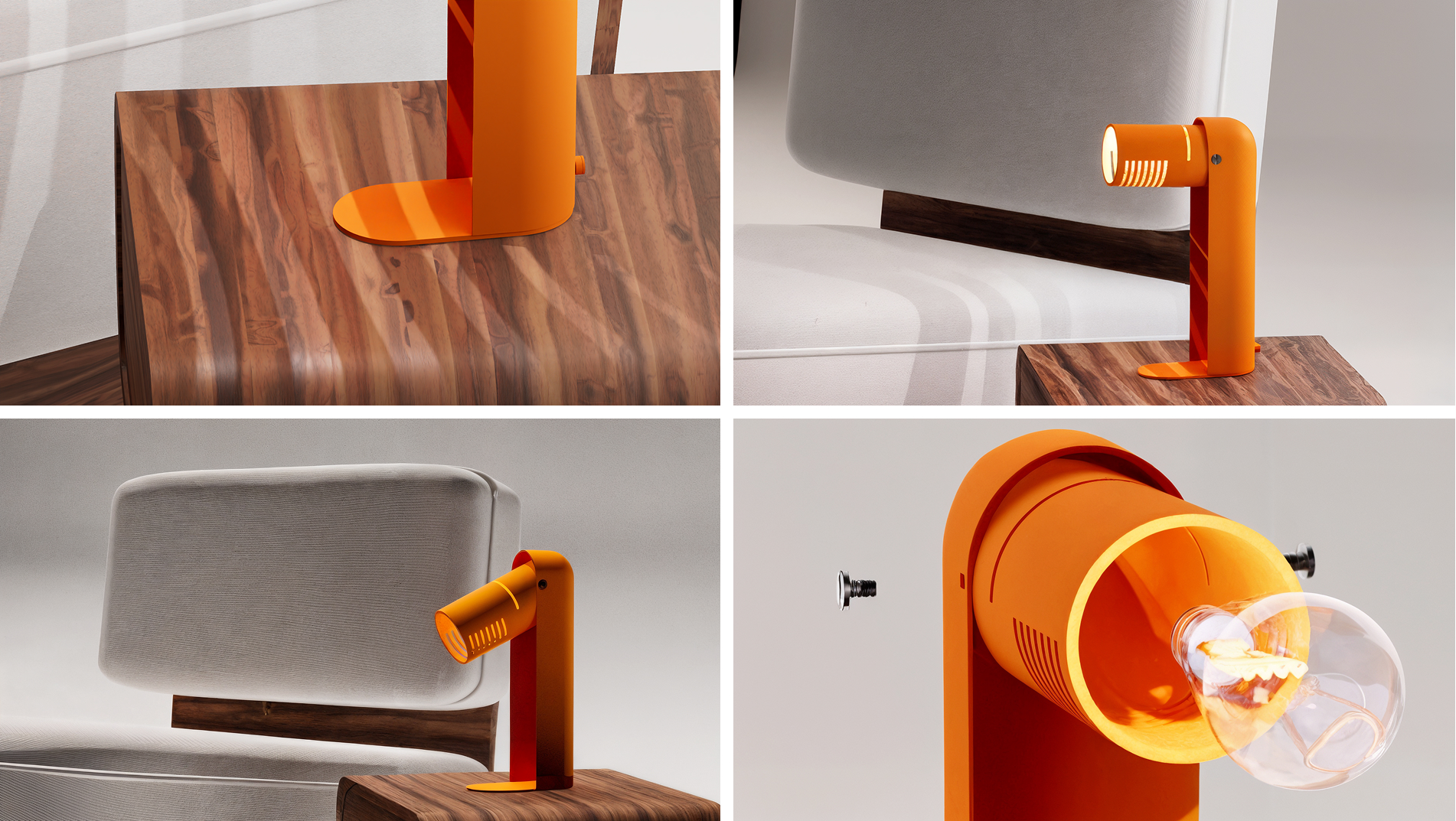
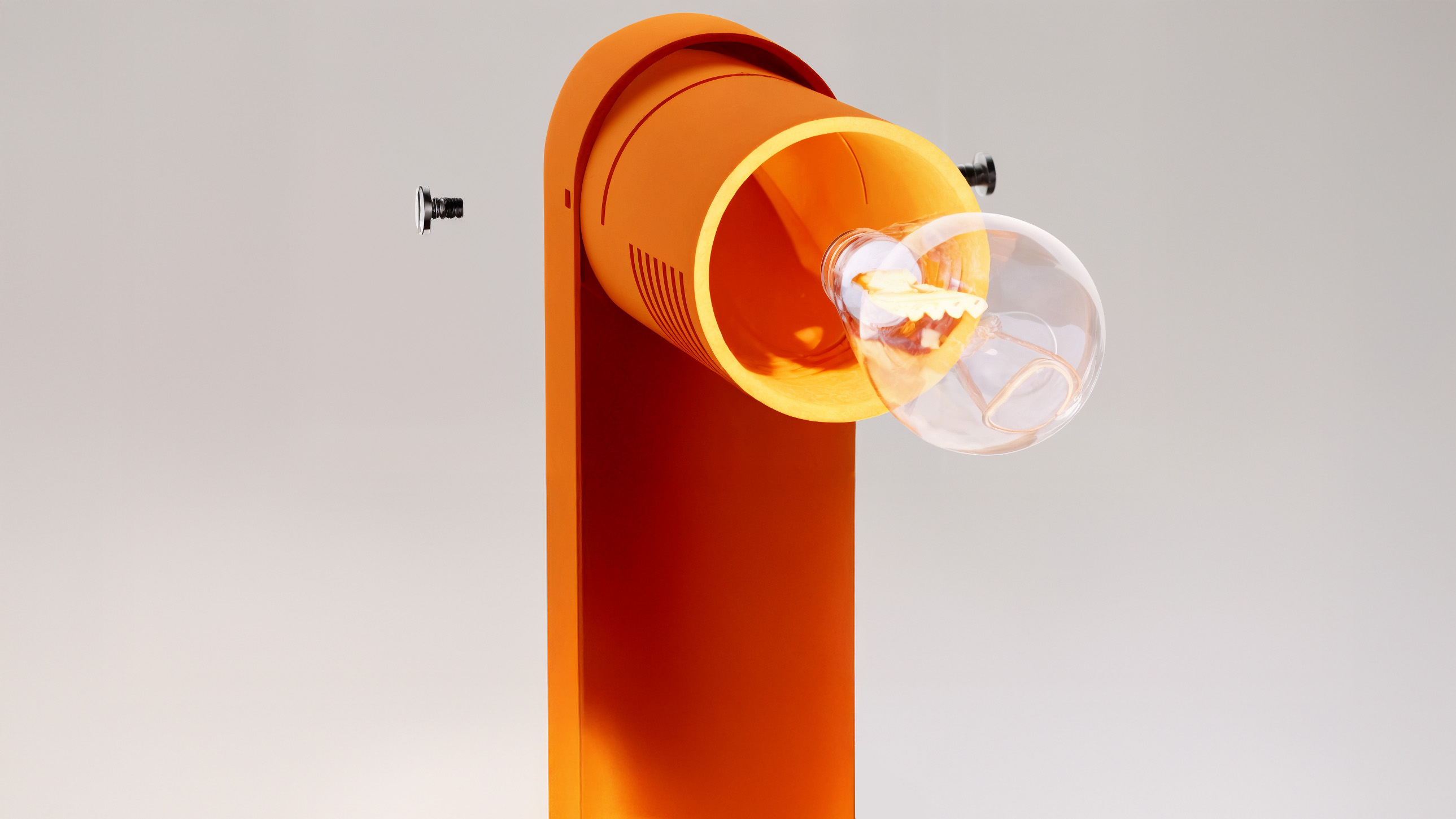
First pass: everything in white, no materials, no colour, just geometry. Every component was modelled separately: the L-shaped body, the cylindrical shade with its ventilation slots, the Edison bulb with its tungsten filament, the chrome screws, the armchair and the table. Built independently from the start, because the film concept required each piece to animate on its own.
To enhance the renders and cut rendering time significantly, I used Crea, an AI-powered render enhancement tool that improved quality without going back into long Redshift cycles. The final renders came out at 4K.
Texturing, shaders and renders
Once the geometry was complete, the personality of the object started to appear.
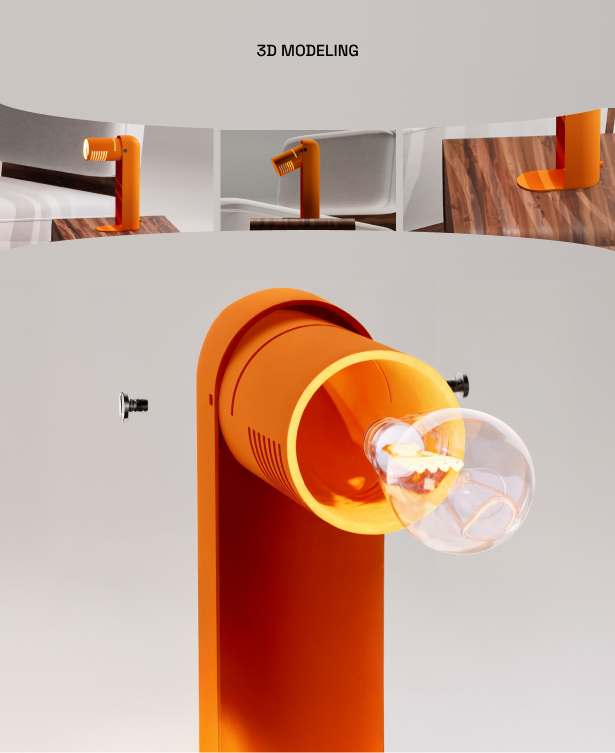
The most critical material was the soft-touch coating on the lamp body. Too glossy and it reads as plastic. Too matte and it loses depth. The right finish lives in the tension between both, with the same tactile quality as the real object.
Each element had its own treatment: matte soft-touch on the body, warm orange on the shade interior to catch the bulb's glow, real IOR glass on the Edison bulb, chrome on the screws, bouclé fabric on the armchair and walnut grain on the table.
The lamp's light signature, curved stripes of warm shadow cast through the ventilation slots, became the visual thread running through every render and every scene in the film.
All renders at 4K · Redshift · 2700K warm amber, enhanced through Crea.


Product poster design
The renders were strong enough to hold a campaign on their own. So that's what I did.
From the hero render (the orange lamp on the walnut table with the bouclé armchair behind), I composed a product poster that works as a standalone piece. The design follows the same rules as the film: clean layout, generous white space, the orange doing all the heavy lifting.
Typography: spaced uppercase, geometric sans-serif. No decoration. The object is the star.
The poster closes the static campaign: model, renders and a print-ready graphic piece that frames the lamp the way it deserves.
Tools: Cinema 4D · Redshift · Crea · ChatGPT · Nano Banana · Higgsfield · After Effects
Have a product that deserves this treatment? See how I work on AI video and 3D product films, or let's talk about your launch.